Custom Furniture Joinery: What Good Craftsmanship Looks Like
For Custom Furniture, good joinery is the difference between a piece that feels planted and one that wobbles when you lean on it. You can see it in tight seams, square corners, and edges that meet without a lip. Before you pay, learn to read the work with your eyes and your hand.
The seams tell the story
A well-made carcass shows consistent, hairline joints. Run your finger along a meeting edge; if you feel a step or a ridge, the boards weren't squared properly. Good joinery leaves nothing to catch a fingernail. On a painted front, look for a smooth plane across the whole face — no dip where two panels meet.
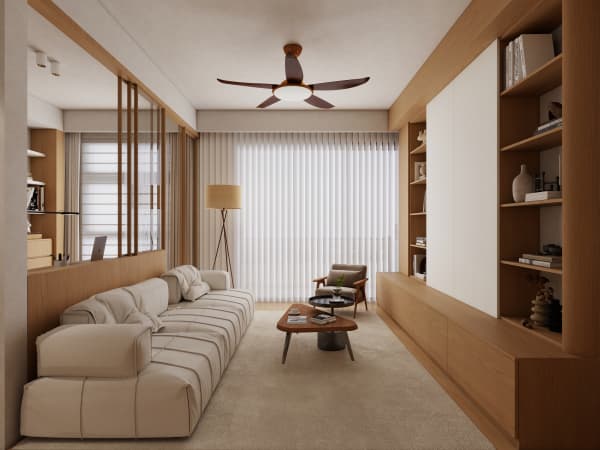
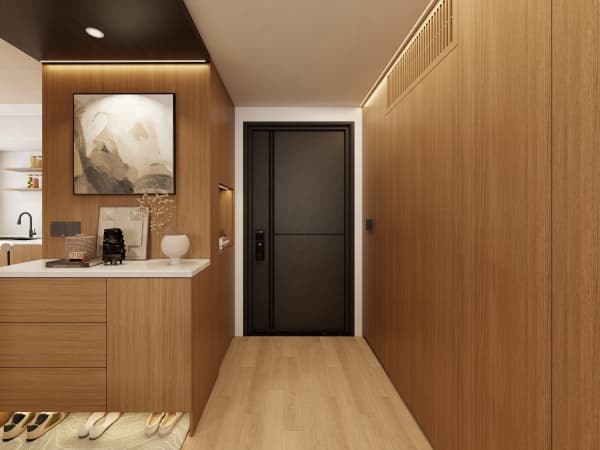
In a typical HDB, the carpentry runs wall to wall and floor to ceiling. Small gaps that look harmless in a showroom become dust traps and light lines in your own flat. A 2mm error repeats across three metres and becomes obvious.
Joint types you'll actually meet
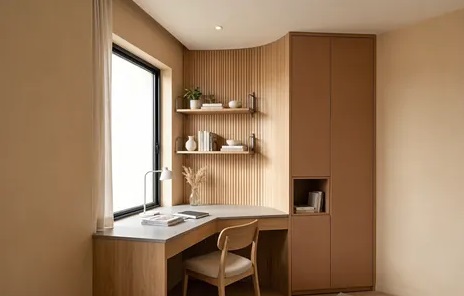
You don't need to be a carpenter, but know the basics so the workshop can't hand you the cheap version.
- Dowel and confirmat screws — common for flat-pack style; fine for low load, but rely on the board edge holding the screw.
- Dovetail — the interlocking fingers you see on quality drawers; it resists pulling apart without glue doing all the work.
- Mitred and banded edges — where the surface wraps the corner so water can't reach the core.
For full-height wardrobes in a 4-room flat of roughly 90 sqm, the back panel should slot into a groove, not just sit on nails. That groove is what stops the whole unit from racking sideways when you slide doors.
How square gets checked
Ask to see the frame before the doors go on. A good workshop measures the diagonal — both corners should match within a millimetre. If they don't, the piece was built on an uneven bench or rushed.
- Check the top and bottom alignment; a crooked base throws off every door above it.
- Push gently at the top corner; solid joinery barely moves, weak joinery rocks.
- Open a drawer and lift it slightly; a dovetailed or locked drawer stays true, a screwed one tilts.
Custom Furniture craftsmanship red flags
These are the things I tell clients to watch for during a site check:
- Visible filler along walls — a little is normal in old HDBs, but a thick bead means poor measuring.
- Mismatched grain or colour across adjoining panels that should read as one.
- Staples on show where screws or concealed fittings should be.
- Doors that need a shim under one corner to sit level.
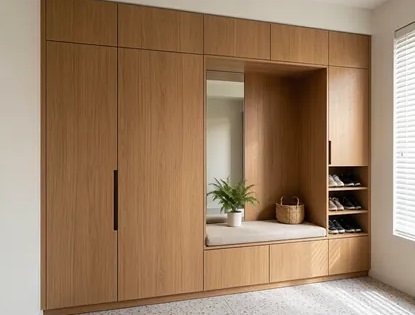
HDB flats carry a one-year defect liability period from the builder, but that doesn't cover carpentry you commissioned. The workshop's workmanship guarantee is your real protection, so photograph the joints at handover and keep the file.
Why it's worth the slower build
Good joinery takes longer in the workshop, which is why a full measure-to-install cycle runs roughly 6 to 10 weeks rather than two. Rushing the glue-up to hit a date is how corners get cut. A 5-room HDB around 110 sqm has a lot of linear metre of carpentry; multiply a small lapse by that length and the home feels rough fast.
Craftsmanship isn't a luxury line on the quote — it's the reason a cabinet still feels solid when you move in and when you hand the keys to the next owner. If you're about to commit to whole-house carpentry, spend ten minutes at the workshop looking at an unfinished carcass. The seams and corners will tell you more than any brochure, and you'll know whether the people building your home actually care about the parts you can't see.