Custom Furniture by shoe cabinet: Shelves That Float Clean
Custom Furniture by the shoe cabinet can include shelves that float clean — wall-hung ledges with no visible bracket, so the entry stays open instead of filling with a second bulky unit. In a 4-room HDB (~90 sqm) where the shoe cabinet already owns the front, a floating shelf adds the drop space without crowding the door. Here's how we fix one that stays put.
Why Float Instead of Stack
A second floor cabinet by the shoes makes the entry feel like a cupboard. A floating shelf holds the keys, the masks, the mail, and leaves the floor clear for the shoes you're putting on.
It also reads lighter — the wall looks like wall, not like more storage bolted on.
Custom Furniture Fixing Methods
The clean look comes from a hidden rod, not screws on show:
A steel batten and slot behind the shelf — the board slides on and the gap closes to nothing; our default for a tidy line.
A concealed French cleat — two angled strips, one on wall, one on shelf, that lock when lowered; strong and adjustable.
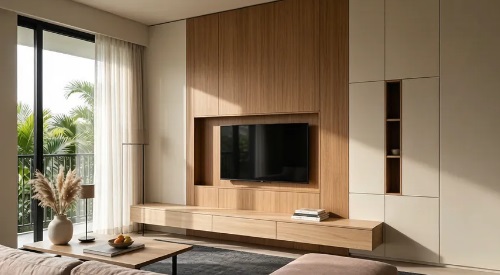
A routed keyhole in the back — cheap but only for light loads, so we use it for a single shallow ledge.
All three need the concrete or stud found first; a hollow wall with the wrong plug drops the shelf by week three.
Materials and the Wet Shoe Risk
The entry catches wet footwear daily:
Plywood — shrugs off the damp from umbrella drips better than MDF, so it's our pick for the shelf above the shoes.
Laminate face — wipes the mud ring off in a second, non-porous, good for a home where the rain comes in sideways.
Solid wood — looks warm but needs oiling or the entry's humidity cups the edge within a year.
We seal the underside especially, because that's the face the wet shoe brushes.
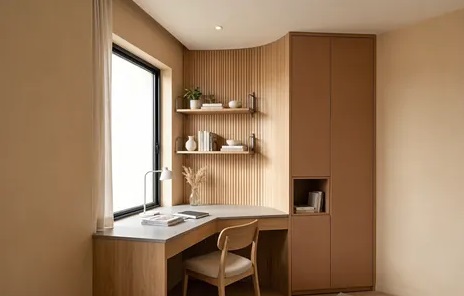
Cost, Timeline, and Rules
A pair of floating ledges by the shoe cabinet runs roughly S$350 to S$1,100 depending on timber and length. As a standalone add-on it's ready in 2 to 4 weeks; as part of an entry build the 6 to 10 weeks window applies.
HDB is fine with wall-fixed shelves using approved anchors; keep the 1-year defect liability period on the fixing. A condo MCST sometimes limits fittings on a shared wall, so check before you drill the party line.
Depth, Height, and Resale
Keep the shelf 200 to 250mm deep — deep enough for a basket, shallow enough not to catch a head at the door. Mount it 1,400mm up so it clears the shoe cabinet top and the kid's reach but stays handy.
Floating shelves help resale because buyers see a calm entry, not a stack. Skip the lit version; the glow dates faster than the grain.
If the shoe cabinet already fills your front, a floating shelf is the cheaper way to add the drop space without another box. Get the maker to find the stud or slab, build the ledge in plywood with a laminate face, and hang it clear of the door swing. Done right, the entry stays open and the keys finally have a home, which is the small win that makes coming home feel less like a locker room.