HDB Renovation: cabinets built for heavy pots
HDB Renovation often looks fine on day one and starts sagging within a year, and the usual culprit is cabinets never built for the weight Singapore kitchens actually carry. If your pots, wok and rice cooker live in custom carpentry, the build has to be heavier than a display shelf.
Why standard carpentry sags under cookware
A HDB kitchen collects real mass. A cast-iron wok, a pressure cooker, a stack of stainless pots — these add up fast. Cheap cabinets use thin boards and weak fixings, and the shelves bow or the hinges pull out. The fix isn't buying "premium" labels; it's specifying the right materials and structure for the load. We see this most in the base cabinets where heavy gear gets stacked deep and the door hinges take the full pull every time you open.
Materials that hold the weight
For heavy items, the carcass and shelves matter more than the door face. Plywood cores handle load and humidity better than low-grade particle board, which swells near the sink and softens under weight. The shelf thickness should be at least 18mm, and for very heavy drawers go thicker or add a centre support. Edge banding also plays a part — a sealed edge resists the moisture that comes with daily cooking and stops the board from peeling at the corners.
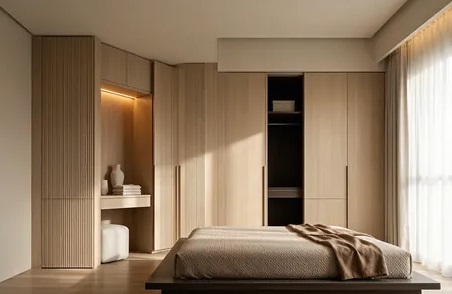
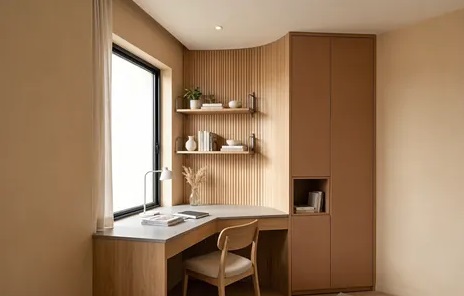
- Plywood carcass for base units that hold pots and appliances.
- 18mm+ shelves, not the slim 12mm you see in cheap builds.
- Sealed edges so humidity doesn't lift the laminate.
- Metal or reinforced brackets at any point that takes a pull.
Drawers that don't drop their runners
Heavy pots belong in drawers, not on fixed shelves you have to kneel to reach. But a drawer is only as good as its runner. Specify full-extension runners with a real weight rating — look for ones rated to at least 30kg to 45kg rather than the light 15kg fittings that feel smooth in the showroom and fail at home. Soft-close is nice, but the load rating is what keeps it working after years of yanking.
Spacing and dividers that save your back
Deep cabinets turn into a graveyard where one pot sits on top of another and you dig every time. Build in dividers so each pot stands or lies in its own slot, and keep the heavy stuff in the lower drawers near the floor rather than overhead. A pull-out shelf at mid height for the wok means you don't lift it down from above. Small changes like this are why whole-house customization beats off-the-shelf units — the carpentry is drawn around your heaviest items, not a generic plan.
Where the weight should and shouldn't go
Don't hang heavy cabinets on a wall that isn't up to it, and keep the very heaviest gear low. In HDB flats the structural walls are off-limits for hacking, but you can still fix wall cabinets to a sound wall with proper anchors. Just match the anchor to the load, and never assume a hollow partition will hold a row of full spice jars plus a microwave. When in doubt, move the weight down into the base units.
Build once, cook for years
The point of custom cabinets isn't a prettier door; it's a kitchen that still works in five years. Specifying the right board, the right shelf thickness and runners with a proper rating costs a little more up front and saves the sag, the stuck drawer and the rebuild. If you want carpentry drawn around your actual pots and pans, that's the kind of whole-house customization we do — measured to your cookware, not a catalogue.