HDB Renovation: the right floor for kitchens
HDB Renovation kitchens face water and heat daily, so the floor must cope. The right choice keeps cleaning easy and stops water from sneaking into places it shouldn't.
What the kitchen floor is up against
A kitchen floor takes more abuse than almost any other surface in the flat. Water splashes from the sink, oil hits the floor when you fry, pots get dropped, and the fridge and washer dump condensation. On top of that, our humidity means anything that traps moisture turns into a mould problem fast. So the floor needs to shrug off water, wipe clean without much effort, and not get destroyed by a fallen wok.
Tiles remain the safe pick for most
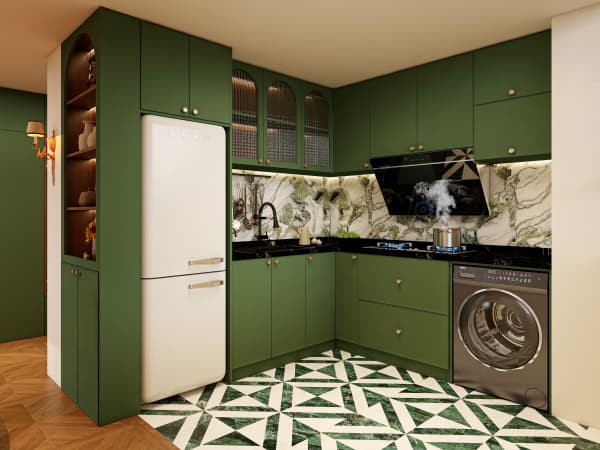
For the wet kitchen especially, tiles are still the default and for good reason. They don't care about water, they scrub clean, and a dropped pot just bounces. Based on recent market observations, kitchen tiling for a typical HDB kitchen runs somewhere in the S$1,500 to S$4,000 range depending on tile choice and whether old flooring needs hacking. The catch is the grout, which needs sealing and the occasional refresh to stay mould-free.
- Porcelain tiles resist water better than ceramic and wear longer.
- A matte or textured finish is safer when the floor gets wet than a polished slip hazard.
- Light grout looks crisp at first but shows stains; a mid-tone grout is easier to live with.
Vinyl in the kitchen, done right
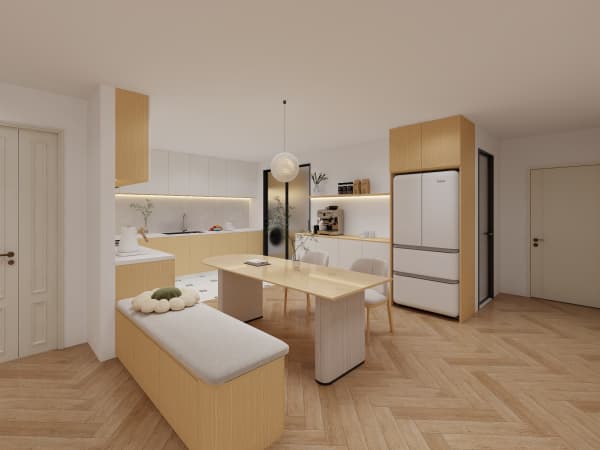
Vinyl has come a long way and a good rigid-core or glued vinyl rated for wet areas can work in a dry kitchen or a neat cook's prep zone. It's warmer underfoot and quieter, and a single sheet with no seams means water has nowhere to go. The risk is edges lifting if water pools, so it suits the dry kitchen or a tidy cook more than a heavy-wash wet kitchen. If you go vinyl, pick a thick wear layer and make sure the installer seals the perimeter properly.
What HDB Renovation rules say about kitchen floors
Floor works in an HDB flat sit under the renovation permit, which you apply within three months of key collection for a new flat or resale completion, and which stays valid for three months. Hacking the existing floor means the S$1,000 deposit for four rooms and up is on the table, and you only get it back after the end inspection passes. Remember too that you can't shift the toilet or hack parapet walls and floor traps, so plan the kitchen layout around what's already there rather than wishing it elsewhere.
- Confirm whether you're overlaying or hacking, since hacking triggers more rules and cost.
- Book the permit early so the flooring slot fits inside the three-month window.
- Keep the work compliant so the deposit comes back without drama.
Cleaning and keeping it fresh
Whichever you choose, a simple routine keeps the floor looking new. Wipe spills the moment they happen, mop with a mild cleaner rather than something harsh, and check the grout or vinyl edges every couple of months for early signs of trouble. A small mat at the sink and cooker catches most of the mess before it spreads. Good flooring is half preparation and half habit, and in a Singapore kitchen the habit part matters more than people expect. If you're doing the whole home, tie the kitchen floor into a single customization plan so it meets the cabinets and tiles without awkward gaps.