BTO Renovation Tips: a realistic budget band for 2025
Planning a BTO Renovation well means knowing what the flat already gives you. From October 2024, flats are grouped as Standard, Plus and Prime, which also shapes resale rules.
Noise Rules During Your Reno
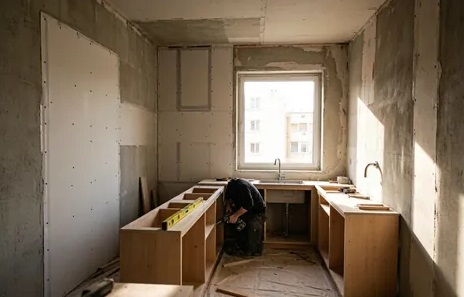
No work on Sundays and public holidays. Noisy works run 9am to 5pm on weekdays and Saturdays, and that is non-negotiable.
Schedule hacking inside those slots to keep neighbours happy, because a complaint can stall your permit renewal.
A simple note in the lift with your schedule shows good faith and heads off most neighbour friction before it starts.
Mark the permit deadline on the calendar the day you collect keys; it arrives faster than you think.
BTO Renovation: Standard, Plus and Prime Explained
From October 2024, BTO flats are classified as Standard, Plus or Prime, with Prime flats in the most central locations and tighter resale conditions.
The category affects future resale rules, so factor it into how much you customise now and what you leave for the next owner.
A Prime flat may suit those who want location over flexibility; a Standard flat gives more freedom later. Match it to your plan.
Live in the flat a month before committing to the full works; the right projects become obvious.
Deposit and Final Inspection
HDB collects $500 for up to three rooms and $1,000 for four-room and larger, refunded after a compliant inspection.
Stay within approved scope so it passes first time and your money returns without a fight or a return visit.
Walk the flat with the approved plan on the day of inspection so you can point to exactly what was permitted.
Newer flats need less hacking, which often keeps the budget below an older resale of the same size.
A Realistic BTO Budget Band for 2025
As a market observation, a 4-room BTO renovation often runs about S$30,000 to S$50,000 and a 5-room about S$40,000 to S$60,000.
Newer flats need less hacking, which can keep costs below an older resale that hides decades of wear behind the tiles.
Your carpentry volume moves the number most, so deciding how much built-in storage you truly need is the key budgeting call.
Keep at least one room flexible so a future buyer can turn it into a nursery, office or guest space.
Building Wardrobes That Fit the Rooms
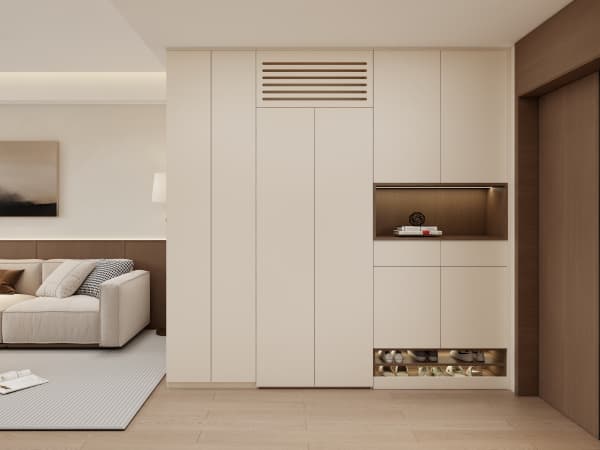
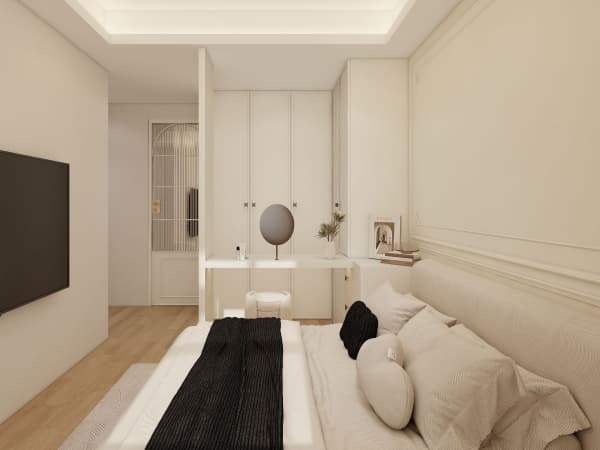
Built-in wardrobes use the full wall height and free floor space. Work around windows and the bomb shelter so nothing blocks airflow.
A mix of hanging, shelves and drawers suits real wardrobes better than one type alone, which always ends up half empty.
Put the most-used items at mid height and the seasonal stuff up high, so you are not on a step stool every morning.
Spend the buffer on things you touch daily, like tap fittings and door hardware, not a wall you forget.
Planning Room by Room
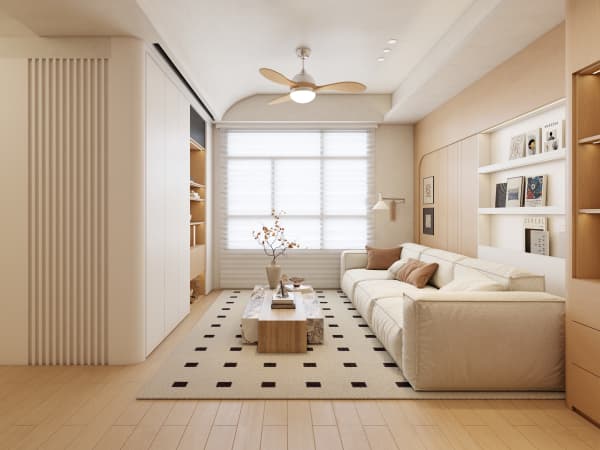
Take the flat one room at a time. The kitchen, master bedroom and living area usually deserve the biggest share of attention and budget.
A simple measured sketch prevents storage that does not fit the wall, which is the most common and most annoying reno mistake.
Rank the rooms by how much time you spend in them. The ranking should match where the money goes, almost exactly.
Spend the buffer on things you touch daily, like tap fittings and door hardware, not a wall you forget.
Treat the flat as a long-term home, not a showcase. Spend where use is highest, keep the look timeless, and it will serve you for years.