HDB Interior Design Singapore: Living Room Mirror Use
HDB interior design Singapore homeowners often ask how to make a 4-room flat feel larger without touching the structure. One practical answer is the careful use of mirrors in the living room. HDB rules still forbid removing load-bearing walls, so visual tricks beat demolition for a small space.
why mirrors work in small Singapore flats
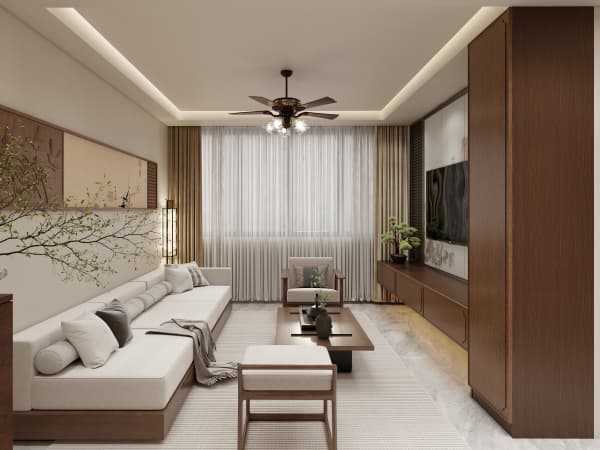
Most HDB flats are compact by design. A 4-room flat measures about 90 square metres, a 3-room flat comes in near 60 to 65 square metres, and even a 5-room flat sits around 110 square metres. The living room is only a slice of that total. Mirrors bounce daylight from the service yard or balcony window, which makes the room read as wider than its plan size. The effect is real, not just decorative.
I have watched a Punggol BTO living room gain a real sense of depth by placing a tall mirror opposite the window. The flat was handed over with basic provisions such as wet-area tiles and a door, and the owner wanted more light without applying for an HDB renovation permit for structural work. Mirrors are surface fixtures, so they sit outside the permit path entirely.
what HDB interior design Singapore trends show about mirrors
Recent Singapore renovation trends lean toward calmer walls and fewer bulky cabinets in the living area. Mirrors fit that shift because they replace a busy picture gallery with one quiet reflective panel. This is part of HDB flat space saving thinking, where every surface earns its place rather than holding clutter.
Keep the mirror away from the bomb shelter door. The household shelter cannot be renovated, and the door must stay in place. A mirror stuck on that door would break the rule. Place the panel on a normal partition or a lightweight laminate feature wall instead.
where to place mirrors without breaking HDB rules
- Opposite a window, to double the incoming daylight.
- Behind a console table, to add perceived depth at the entry.
- On a non-structural laminate partition, which HDB allows for light dividers.
- Along a corridor wall, to make a narrow walk feel less tight.
- Never on a load-bearing wall where hacking is planned, since those walls cannot be touched.
Window grilles stay required on windows above certain floors for child safety. A mirror near a grille is fine, but do not remove the grille to mount the mirror. The grille is a safety item, not a style choice you can drop.
step by step: installing a mirror feature panel
- Measure the wall width and pick a mirror that covers about 60 percent of it. A full wall mirror can feel heavy and clinical.
- Choose a lightweight framed panel rather than a thick glass sheet. Lighter weight means safer fixing and easier handling.
- Mark the centre point with a pencil and confirm it sits level with a simple spirit level.
- Use wall anchors rated for the mirror weight. HDB flats use concrete walls, so proper anchors hold well.
- Fix a French cleat or strong adhesive pads, following the supplier guidance for concrete surfaces.
- Step back and check the reflection. If it shows a cluttered corner, shift the angle slightly.
- Add a thin LED strip above the panel if you want soft evening light, but keep the wiring inside a proper conduit.
common mirror mistakes to avoid
The first mistake is covering the whole wall. A giant mirror can make the room feel like a dance studio. The second is placing it where it reflects the television, which creates glare at night. The third is skipping safety film. In a home with kids, a shatter-resistant backing is worth the small cost. A fourth issue is poor lighting around the mirror, which leaves it looking dull during the day.
Another point is cleaning. A mirror near the kitchen side of an open layout picks up grease faster than you expect. Use a mild cleaner and a microfibre cloth so the surface stays clear and useful.
pairing mirrors with carpentry
Mirrors work best when they sit beside built-in pieces. A mirror beside a built-in shoe cabinet at the entry gives a last glance before you leave. In the living room, a mirror above a low media console balances the weight of a television. This is where HDB flat space saving meets daily habit, because the mirror does two jobs at once.
When you plan HDB interior design Singapore projects, mirrors are a low-risk way to open a living room. For a full result, our whole-house customization approach pairs mirror placement with built-in carpentry and lighting so the space feels considered rather than patched together. Talk to our team about a mirror plan that fits your flat footprint and your daily routine.