Condo Regulations Singapore: Safe plans for landed homes
A Condo Regulations in Singapore lives or dies on the small decisions made before the build. Pick the right board where water sits, keep the escape route clear, and work with the flat instead of against it.
Getting the five-day neighbour notice sorted early
In HDB renovations, hacking triggers a five-day written notice to the households above and beside you. It is a courtesy and a rule: it lets neighbours protect their items from vibration and dust. The builder handles the notice, but the owner should confirm it went out before the breaker starts.
Common questions about renovation stages in order
Renovation is a relay, not a race. Hack first, then the wet trades tile and screed, then electrical and plumbing first-fix, then paint, then the carpenter measures and builds, then the second fix and the clean. Each stage blocks the next, so a delay at the front echoes to the end. A clear schedule keeps the chain moving.
Where open kitchens and town gas usually go wrong
Many new owners want the island look but keep the gas. You cannot have both under the current setup, so decide early. Induction has improved enough that most cooks adapt within a week, and it is safer with kids around. If you must have gas, keep a partial wall or a full-height unit that still counts as enclosure.
Where choosing a contractor usually go wrong
Pick a contractor on evidence, not a flyer. Ask for two recent jobs you can visit, check the warranty terms, and read the contract for the payment schedule. In Singapore, a registered firm with a showroom is easier to hold accountable than a one-man team you found on a messaging app.
Understanding what can be hacked in Singapore
Some walls look partition but carry load. The floor plan and the permit tell the truth, not the eye. Hacking a load-bearing wall risks the block and a heavy fine. When in doubt, stop and check with the builder or the authority before the breaker touches the wall.
Take a 4-room BTO flat as a typical case: the owner had a home office nook to fit, and the carpenter planned the storage around the actual items rather than a standard grid, which removed the dead corners that plague smaller Singapore homes.
Understanding HDB renovation permits in Singapore

A common slip is booking the carpenter before the permit lands. The real sequence runs: collect keys, pay the HDB deposit for new flats, appoint a licensed builder, submit plans, wait for the permit, then start. Resale flats skip the deposit but follow the same permit step. The five-day neighbour notice also kicks in once hacking is approved, giving households above and beside you time to protect their homes.
Getting reading a quotation sorted early
A quotation should read like a bill of materials, not a single sum. Look for the board grade per cabinet, the edge type, the hinge brand class, the number of drawers, and the lighting. If an item is missing, assume the cheapest version, then decide. A clear quote also lists what is not included, like plumbing or hacking.
How wall and load limits affect your schedule
Every HDB flat has walls that carry the block above, and those stay. The floor also has a limit of about 200 kg per square metre, which caps how much you can pile into a cabinet run. Heavy granite, full plywood and a stacked store push that line, so spread the load and keep the island light.
Where condo MCST renovation rules usually go wrong
Deposit amounts vary by development but often sit in the low thousands, refundable after the defects walk and a clear clearance from the MCST. Keep the clearance letter. If you sell later, the new buyer's lawyer will ask for proof that past renovations were compliant, and a missing letter becomes a small headache at the worst time.
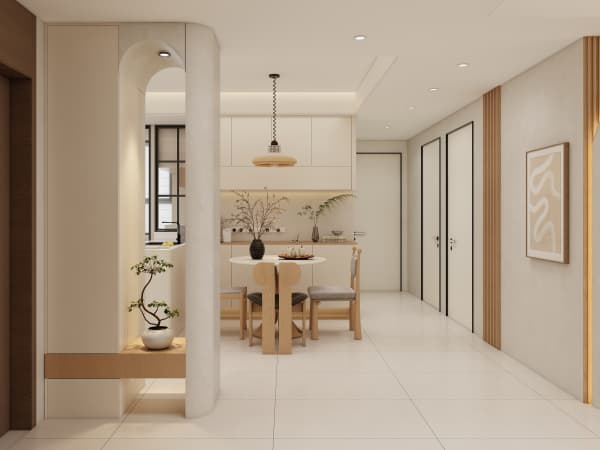
Take a corner terrace house as a typical case: the owner had an open living-dining area to fit, and the carpenter planned the storage around the actual items rather than a standard grid, which removed the dead corners that plague smaller Singapore homes.
How condo by-law specifics shape the final result
Keep the MCST clearance letter with the renovation records. When you sell, the buyer's side will ask whether past works were compliant, and a missing letter slows the deal. A five-minute file note today clears a week of friction at the lawyer's table later.
The flats in Singapore are built to a standard, but the kitchens and wardrobes inside them are anything but. Keep these points in mind, ask the right questions before you sign, and your Condo Regulations will lead to a home that works.
One more point worth a line: keep the contact of the person who owns your project in a single note, with the quote, the permit and the warranty. When something needs a fix in year two, that note is what turns a denied claim into a quick visit. The paper you file today is the service you get later.
A small habit that pays off is to photograph the finished work at handover, before the furniture goes in. The shots show the edges, the gaps and the mitres as they should be, and give you proof if a fault appears after. Five minutes with a phone beats a week of argument about what changed.
Think about the next owner too. A clean, compliant build with the paperwork in order sells faster and for more, because the buyer's lawyer has fewer questions. The work you do for yourself also works for the resale, so treat the records as part of the asset, not just the receipt.
Do not chase the lowest number at the cost of the details. A job that saves on the edge banding and the hinge shows it within a year, and the fix costs more than the saving. Spend on the parts you touch daily, and the home feels right long after the photos are taken.
Finally, give the build a week before you judge it. Wood settles, doors find their rest, and a small adjustment at the start of use prevents a bigger one later. A carpenter who returns for the punch-list is worth more than one who disappears the day the balance is paid.