Custom Furniture at kitchen: A Fishing Rod Rack Tall
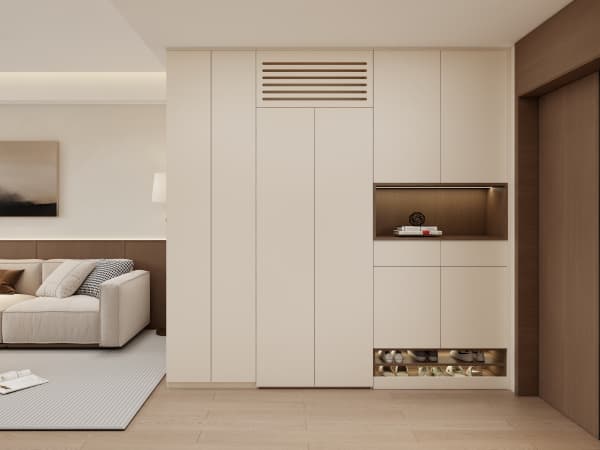
Custom Furniture is the only sensible answer for a tall fishing rod rack in a Singapore kitchen, because off-the-shelf stands assume a landed-house storeroom and your HDB bomb shelter or yard simply isn't built that way. A floor-to-ceiling rod rack keeps six or eight rods safe, dry, and out of the way of the helper's mop and the kids' school bags.
Why a tall rack belongs in the kitchen zone
Most anglers in a flat keep their gear near the service yard or the bomb shelter, both of which sit off the kitchen. The catch is height: a 2.6 m ceiling gives you far more vertical room than any shop-bought rack uses. A custom column can run from floor to about 2.4 m, holding rods horizontally on padded arms on the upper section and reels, tackle boxes, and a landing net on open shelves below.
Build it only about 35 to 45 cm wide so it tucks into the dead space beside the yard door or along the bomb shelter wall without blocking the passage. Keep the rod arms at 30 to 40 cm spacing so the reels don't knock together, and angle the whole thing slightly so gravity keeps the butts seated.
- Upper tier: horizontal padded arms, 6–8 rods
- Mid tier: shallow shelves for tackle boxes and line spools
- Lower tier: a locked or lidded bin for hooks and tools away from children
Materials and the humidity problem
The kitchen and yard are the most humid corners of a flat, so avoid raw MDF and bare chipboard. Marine-grade plywood or a phenolic board resists the moisture that ruins cheaper carcasses. Wrap the rod arms in felt or closed-cell foam so the blank doesn't rub against raw edge banding. A simple push-to-open door in front of the lower tier keeps the look tidy and stops the helper from mistaking your tackle for recycling.
If the rack sits against the bomb shelter, remember you cannot hack that wall and you should not screw deep into it without checking for the reinforced concrete — surface mounting with proper concrete anchors is fine, but ask your contractor where the rebar runs before drilling.
Before the carpenter cuts the arms, lay your longest rod on the floor and measure the butt-to-tip length — most local saltwater rods run 1.8 to 2.4 m, and the arms need to clear the reel, not just the blank. If you fish both spinning and conventional, mix arm depths so the bigger reels don't overhang into the next slot. That five-minute measure saves a rebuild and stops your favourite setup from scraping the wall every time you pull it out.
Custom Furniture for the keen angler: cost and timing
A tall rod rack is a small job, but it is fiddly, so treat it as part of a bigger carpentry order if you can. On its own you are looking at roughly S$500 to S$1,100 depending on width, door, and whether the lower tier is locked. Lead time is the usual 6 to 10 weeks from confirmed drawings, and the standard one-year defect warranty should cover the joinery and the door hinges. Tell the carpenter upfront how many rods you actually run — building for twelve when you own five just wastes width you could use for tackle.
Done well, the rack turns a tangle of rods in the corner into a clean vertical column you barely notice, and your reels stop collecting kitchen grease. That is the quiet win of building to the room instead of the catalogue.