Custom Furniture by loft bed: Quartz, Stone or Solid Wood
Custom Furniture by loft bed comes down to one practical question for the top surface: quartz, stone, or solid wood. The honest answer is that most loft beds use a timber platform, and quartz or stone only makes sense for a low, fixed study nook rather than a raised sleeping frame.
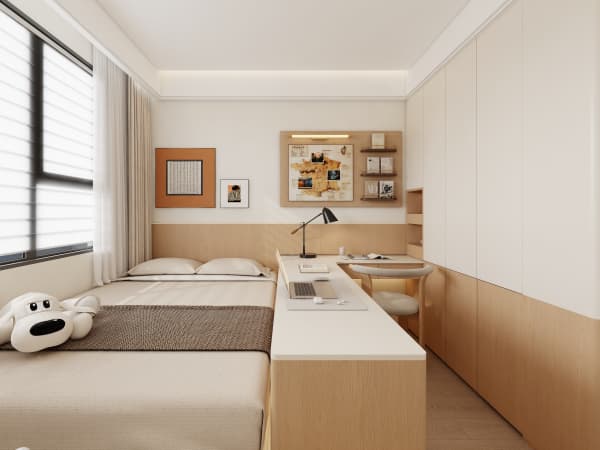
A loft bed lifts the mattress to free floor space below for a desk or wardrobe. In a compact HDB 4-room (roughly 90 sqm) or 5-room (about 110 sqm), that recovered ground is gold. But the platform has to stay light, which is why the heavy tops deserve a careful look before you commit.
How Custom Furniture Handles the Loft Bed Top
The working surface of a loft is the platform you sit or sleep on, not a counter you cook on. For that reason workshops in Singapore almost always build it from plywood with a laminate or timber-veneer skin. It's strong enough, light enough, and kind to the floor below.
Quartz and natural stone are gorgeous and tough, but they're heavy. Slapping a stone slab on a raised loft adds load the frame and the floor must carry, and HDB flats have floor loading limits you don't want to test. Stone suits a built-in desk or window seat at ground level far better than a loft.
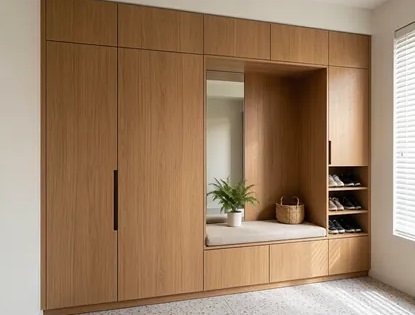
Solid wood is the middle path: warmer than laminate, lighter than stone, and it ages with character. A thin solid-timber deck on a well-built frame gives you the look without the weight of a slab. That's the choice I'd steer most people toward for the sleeping level.
Cost and What Drives It
A basic plywood-and-laminate loft platform runs roughly S$1,500 to S$3,500 fitted, depending on span and the stairs or ladder you choose. Swapping the deck for solid wood adds perhaps S$400 to S$1,200. Quartz or stone, if you insist on a ground-level built top, starts around S$80 to S$150 per foot run on top of the carcass.
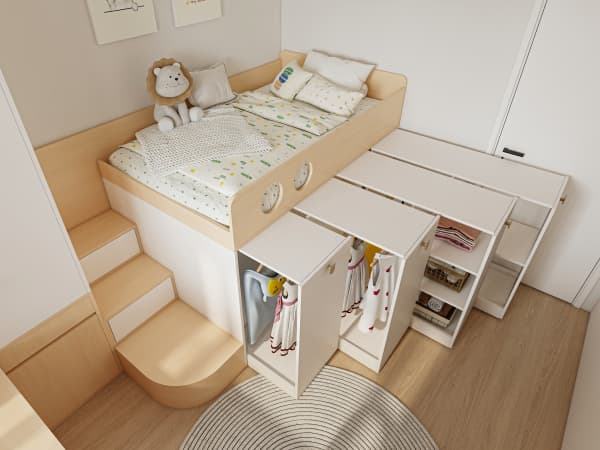
Whole-house jobs here average S$30k to S$70k, so the loft is a meaningful but contained spend. From measure to install, plan about 6 to 10 weeks, with the frame built off-site and a day or two of fitting at home. Keep the delivery window in mind if you're in a condo under MCST rules.
Materials: The Real Trade-offs
Plywood is the quiet hero — stable in our humidity, screws hold, and it doesn't break the bank. MDF is smoother for paint but hates water, so leave it out of any loft near a bathroom wall. Laminate on the deck wipes clean and resists the scuff of daily feet.
Solid wood feels right under you and lasts, yet it moves with moisture and needs the odd oil. Quartz shrugs off stains and heat, which is why it's loved for kitchen counters, not lofts. Stone looks grand but chips and needs sealing. Match the material to where the loft actually sits in the room.
Care, Rules, and Resale
Dust the deck weekly and tighten the frame bolts every six months — a loft sees more movement than a fixed cabinet. HDB flats carry a 1-year defect liability period after key collection, so flag any creak or sway to your contractor while it's covered, not after.
On rules, a loft bed is a loose fitting, not a structural change, so it's generally allowed as long as it doesn't block a window needed for ventilation or a fire escape route. Condo MCSTs may still want it noted in the renovation permit, so check before you build.
At resale, a tidy loft reads as smart space-saving, which Singapore buyers respond to in smaller flats. Keep the stairs safe and the look clean, and it adds appeal. If the platform is solid wood, say so — it signals the home was finished with care rather than rushed.
Pick the material for where the loft lives. Timber deck for the sleeping level, quartz or stone only for a grounded built-in below. Measure the span, respect the floor load, and let the loft give you a room you didn't think the flat had.