Custom Furniture by pantry: A Spice Rack to the Ceiling
Custom Furniture for your pantry makes the most sense when you build the spice rack right up to the ceiling. In a typical Singapore HDB 4-room flat of roughly 90sqm, the kitchen is small, and jars eat up the little counter space you have. Going vertical turns dead air into storage you actually use every day.
Why a full-height spice rack works in a Singapore kitchen
Most HDB kitchens sit around 2.6 to 2.7 metres tall, but people only use the bottom half. A ceiling-height rack grabs that upper stretch for things you reach less often, like backup sauces, festive baking supplies, and bulk buys from the warehouse stores.
The trick is grouping. Keep daily spices at eye level between 1.2 and 1.6 metres. Push the once-a-month items to the top. You save the easiest zone for the things your hand goes to without thinking.
For condo owners, the same logic applies, though your pantry might be a narrow storeroom off the kitchen rather than a true room.
Custom Furniture materials that hold up in our humidity
Singapore's humidity is rough on cheap board. Here's how the common choices compare:
Plywood – resists warping better than MDF and costs less than solid wood. A good middle pick for a pantry that stays fairly dry.
MDF with laminate – smooth and cheap, but it swells if a jar leaks or the aircon drips. Fine for upper shelves away from sinks.
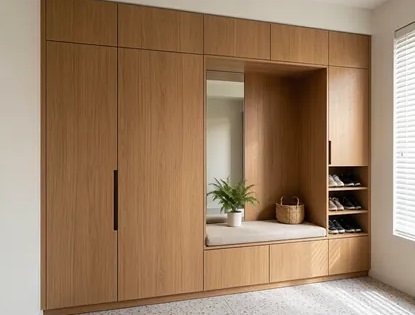
Solid wood – looks warm and lasts, but it moves with the weather and needs upkeep. Pricey for a space guests never see.
For a spice rack, plywood with a laminate face is the plain sensible choice. It stays straight and wipes clean.
Steps to plan your ceiling-height rack
Measure the wall from floor to ceiling, then note any cornice or pipe runs near the top. In HDB flats the ceiling often hides wiring, so keep the top 5cm clear and let your carpenter confirm before fixing.
Decide shelf depth. Spice jars are shallow, so 20 to 25cm deep is enough and keeps the rack from eating walkway space. Leave 30 to 35cm between shelves so tall bottles fit.
Fix the uprights to the wall, not just the floor, so the unit can't tip. Add a simple ladder pull-down or a small step stool nearby for the top row.
Your Custom Furniture project from measure to install usually runs about 6 to 10 weeks once you've picked a workshop, which lines up with a normal reno window.
Cost and what affects it
Roughly, a floor-to-ceiling pantry rack runs S$800 to S$2,000 depending on width, material, and whether you want doors. Plywood with laminate sits at the lower end; solid wood or soft-close fittings push it up.
Most homeowners in Singapore spend S$30k to S$70k on a full reno, and a pantry rack is a small slice of that. Treat it as part of the kitchen budget rather than a standalone bill.
Remember the 1-year defect liability period on HDB and many condo renovations. If a shelf sags or a hinge fails within that first year, your contractor should fix it at no charge, so keep the paperwork.
Keeping it useful years later
Wipe shelves every couple of months and check the wall fixings once a year. Humidity can loosen screws over time, and a quick tighten avoids a worse problem.

A ceiling-height rack also helps resale, since buyers in Singapore love storage that looks built-in and tidy. It reads as "the flat is well thought out" even if the rest is plain.
We put ours in last year and the top shelf now holds the rice cooker box and festive stuff we never knew where to keep. The daily spices finally have a home at eye level, and the counter stays clear for actual cooking.