Custom Furniture by sideboard: How the Workshop Makes It
Custom Furniture built around a sideboard starts with your wall's exact width and your storage list, then the workshop cuts and assembles every panel to fit that space rather than forcing a standard box into it. That single difference is why a built sideboard clears clutter a shop unit can't.
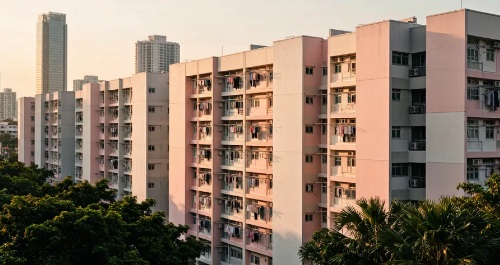
A sideboard earns its keep in the dining or living area, where it hides the things you reach for often but don't want on show. In an HDB 4-room flat (roughly 90 sqm) or a 5-room (around 110 sqm), the wall beside the dining table is often dead space a ready piece leaves half-used. Building to measure fills it.
How the Workshop Builds Your Custom Furniture
The first visit is a measuring session. The carpenter notes the wall length, any skirting, the floor-to-ceiling height, and whether the surface is flat. Older resale flats in Singapore often have slightly bowed walls, and that matters more for a long sideboard than a short one.
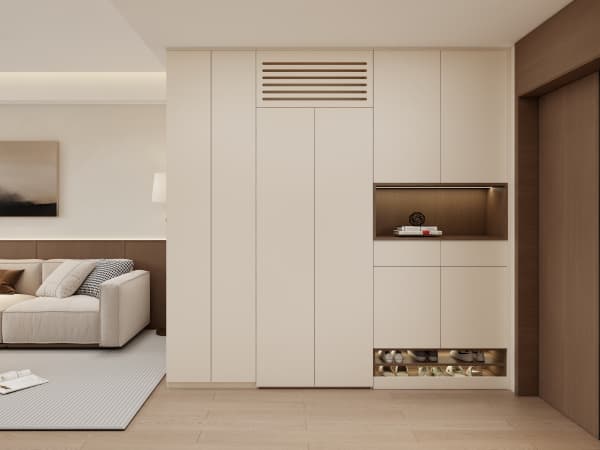
From there the maker draws the layout. You decide the internal split: deep drawers for placemats, open shelves for the router and Wi-Fi box, a cupboard section for bulky serving bowls. This is where built-to-measure pays off, because the inside matches what you own instead of a generic shelf grid.
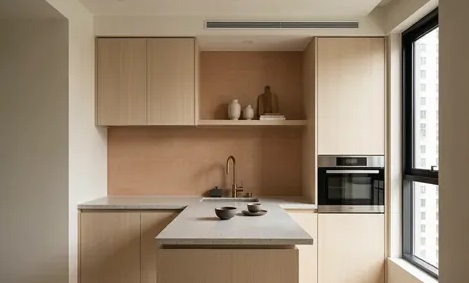
Material choice comes next. Most local workshops build the carcass from plywood, which holds up against our humidity better than raw chipboard. The doors get a laminate or veneer face. Solid wood is an option for the top, but it costs clearly more and needs care near the window.
What It Costs and How Long It Takes
A built sideboard for one wall runs roughly S$1,200 to S$3,000 depending on length, material, and the number of drawers. That sits inside the broader whole-house picture, where HDB renovations in Singapore average S$30k to S$70k all in. The sideboard is a small slice of that, but it's one you'll use daily.
From measure to install, expect about 6 to 10 weeks. The cutting and assembly happen off-site, then a half-day fitting brings it home. Condo owners should check the MCST's renovation rules first — many buildings restrict delivery hours and require protective lifts, which can nudge the schedule by a few days.
Materials: The Honest Trade-offs
Plywood carcasses are the steady choice: stable, resist termites, and fair-priced for a single piece. MDF gives a smoother painted finish but soaks up water, so keep it away from the kitchen pass. Laminate surfaces wipe clean and shrug off scratches from daily use.
Solid wood reads warmer and lasts longest, yet it expands and shrinks with moisture, so a solid top needs a stable spot and the occasional oil. For most homes I'd put plywood inside and laminate outside, then spend the saving on good soft-close hinges that won't wake the house at night.
Keeping It Sound and What It Means at Resale
Wipe the top with a damp cloth, not a soaked one, and keep the back a few centimetres off the wall so air moves. Check hinges at the one-year mark — HDB flats carry a 1-year defect liability period after key collection, so raise any sagging door with your contractor while it's still covered.
When you sell, a fitted sideboard reads as a cared-for home rather than a quick fix. Buyers in Singapore like storage that's already solved, and a clean built-in line along the dining wall tends to lift the feel of the room more than a loose second-hand cabinet would.
None of this is complicated once the wall is measured. Tell the workshop what you store, pick plywood and laminate for the everyday parts, and let the sideboard do the quiet work of keeping the room calm. You'll wonder why you put up with a gap underused for so long.