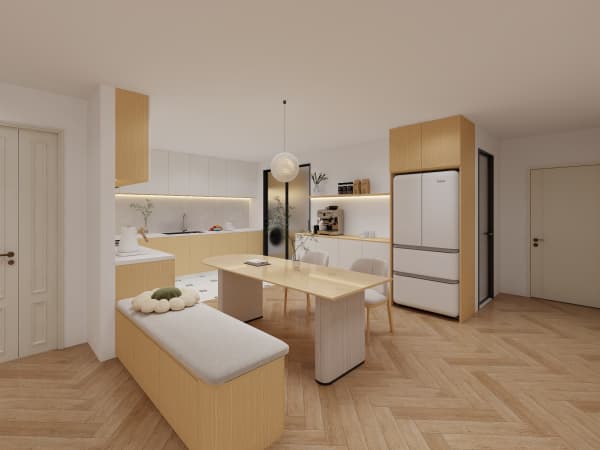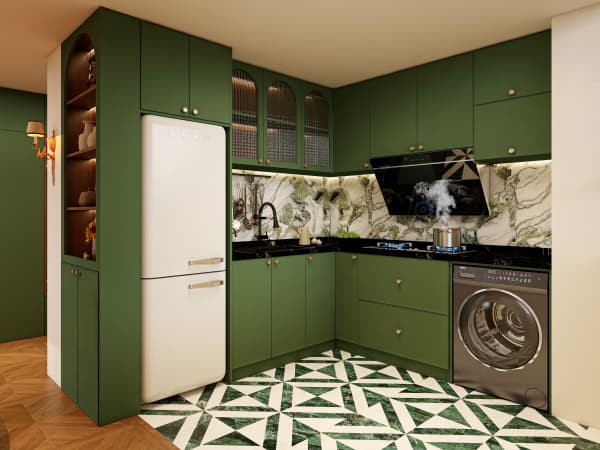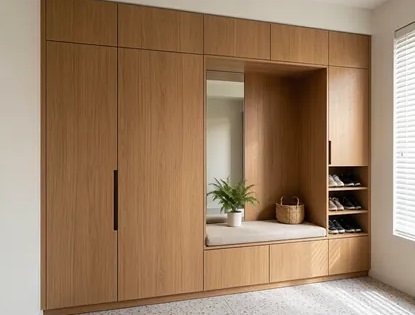
Custom Furniture Finishes: Laminate vs Veneer at Home
For Custom Furniture finishes in a Singapore home, laminate is the practical everyday winner and veneer is the one you choose when the grain matters more than the wear. Laminate shrugs off scratches and water; veneer shows real wood but needs more care. Pick based on the room, not the showroom.
What each finish actually is
Laminate is a printed decorative layer fused onto a board under heat and pressure. Modern prints are good enough that most guests can't tell a wood-look laminate from the real thing until they touch it. Veneer is different: it's a thin slice of genuine wood glued to the surface, so the grain is the actual tree.
That single difference drives everything else. Laminate is a picture; veneer is the thing itself. Both go on top of a plywood or MDF carcass, so your choice of finish doesn't change the board underneath.

Where laminate earns its keep
In a typical HDB kitchen or a kid-heavy living room, laminate is hard to beat. It wipes clean, doesn't stain from curry or coffee, and a knocked edge rarely shows.
- Water resistance makes it right for bathrooms and kitchen cabinets.
- Colour range is wide — matte, gloss, wood-look, even stone patterns.
- Price stays low, which helps when you're fitting out a whole 4-room flat of roughly 90 sqm.
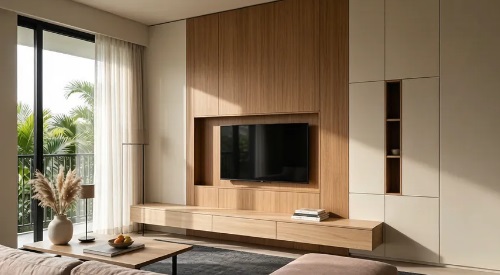
The 2025 shift toward matte and suede textures means laminate no longer looks cheap. A soft-touch surface reads as calm and modern, which is what a lot of BTO owners want right now.
When veneer is worth the extra
Veneer gives you the depth and warmth that a print can't fake. Light catches it differently through the day. For a feature wall, a study, or a master bedroom where you slow down and notice, veneer pays off.
It does ask for more. Keep it out of splash zones, use coasters, and accept that a bad knock leaves a mark you can't simply buff out. Veneer also costs more — often roughly 30% to 60% above a comparable laminate, depending on the species.
Custom Furniture finish care, side by side
Here's the daily reality for both:
- Laminate: wipe with a damp cloth, no special products, survives most abuse.
- Veneer: dust lightly, avoid wet rings, treat marks early before they set.
- Both: keep direct sun off large panels; east-facing HDB windows can fade a finish over a few years.
If you mix them — laminate in the wet kitchen, veneer in the dry living room — you get the best of both without blowing the budget. Condo owners under MCST rules face the same wear, just with more open-plan living to protect.
Deciding without overthinking
A simple way to choose: list the surfaces that get touched or wet daily. Those become laminate. List the ones you want to admire. Those can be veneer.
- Walk the flat and mark high-contact zones — kitchen, shoe cabinet, kids' wardrobe.
- Mark show surfaces — TV feature wall, headboard, study desk front.
- Price both and see where the veneer budget stretches. Most homes land at 70% laminate, 30% veneer.
The finish you pick shapes how the home feels for years, not just on moving-in day. Laminate lets a busy household relax, while veneer rewards the rooms where you actually pause. If you're planning carpentry and can't decide, start by splitting the flat into "touched a lot" and "looked at a lot" — the answer usually falls out on its own, and you'll spend the money where it earns its keep.