Custom Furniture for guest room: Air Flow Behind Cabinets
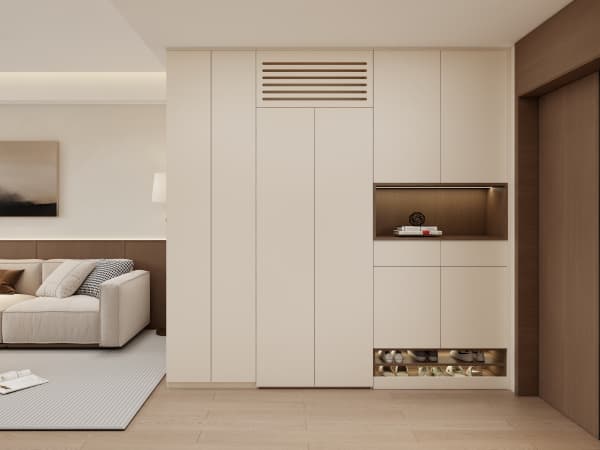
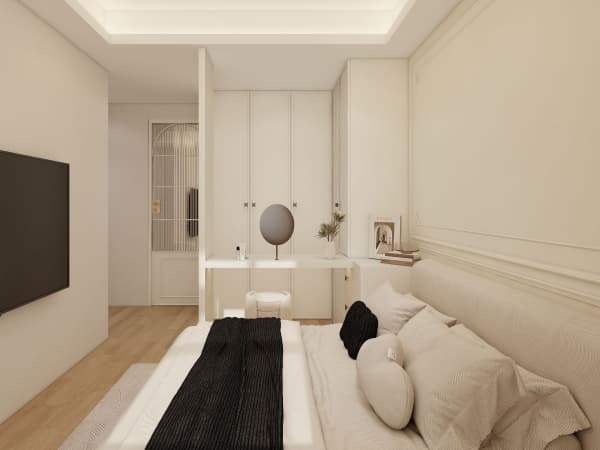
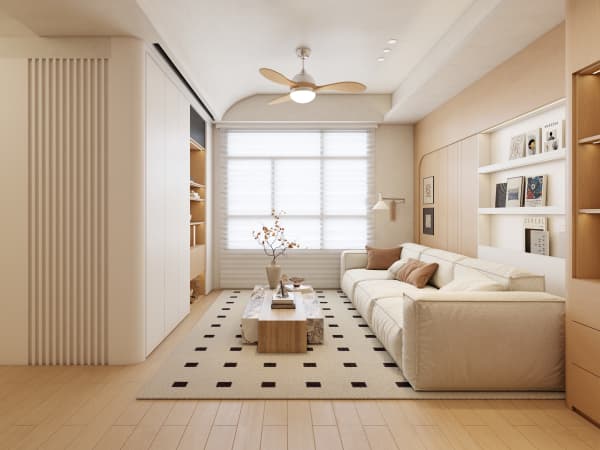
Custom Furniture in the guest room needs air flow behind the cabinets, or you'll get a musty smell that no air freshener fixes. Singapore's humidity is relentless, and a cabinet backed tight against an external wall is a recipe for trapped moisture and eventually mould.
Why the gap behind matters
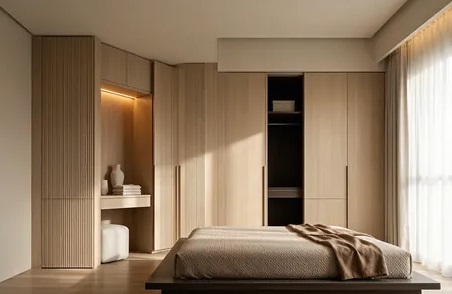
External walls in local flats stay cooler than the room, so condensation forms where warm air meets that surface. If your cabinet sits flush, water has nowhere to go. A 20 to 30mm gap behind the carcass lets air move and keeps the back dry.
In a 4-room HDB of about 90sqm, the guest room often has one external wall. Build the cabinets on a slim plinth that lifts them off the floor too, so air flows both behind and underneath. The guest room is used less, so still air there turns stale faster than in busy rooms.
Custom Furniture materials that breathe better
Plywood with laminate handles humidity better than MDF, which soaks up moisture and balloons. Solid wood moves with the seasons and can gap at the back, letting damp in. Laminate faces seal the front, but the back panel should be vented or left open. The right Custom Furniture here keeps the guest room dry without you thinking about it.
Add a few 10mm holes in the back panel near the top and bottom, or use a slatted back. Skip solid backing entirely if the wall is external. A matte laminate on the visible faces is enough; you're after function, not show.
Cost, timeline, and permissions
Building a guest room cabinet with proper air flow adds roughly S$100 to S$400 over a sealed one, mostly for the plinth and venting. Across a reno that on average costs S$30k to S$70k, it's negligible and worth every cent.
Measure to install runs 6 to 10 weeks. During the 1-year defect liability period, check for any musty odour and raise it, since trapped damp is a build defect. Condo MCSTs won't flag internal ventilation, but don't vent into a common wall cavity.
Upkeep and resale value
Open the guest room windows weekly when it's empty, and run a dehumidifier during the wetter months. Pull items out every few months and feel the back panel for damp. Catching it early saves a full rebuild.
For resale, a guest room that smells fresh on viewing day is half the battle. Buyers may not see the air gap, but they'll notice a clean, dry room over a stuffy one. Good air flow behind cabinets is invisible insurance for both your health and your sale price.
A practical habit is to leave the guest room door open a crack during the day so air drifts through from the living area, since a shut room in a sealed flat goes stale fast. During the November to January monsoon stretch, run the air-con in the room for an hour weekly even if no one's staying; the cooling pulls moisture out of the air and off the cabinet backs. It costs little and spares you a mould job later.
If you already have sealed cabinets and smell damp, don't panic; drill a few vent holes and lift the unit on small blocks. It's a same-day fix that spares you a bigger headache down the line.