Custom Furniture of corridor: Hinges and Runners That Last
Custom Furniture along a corridor only earns its keep if the hinges and runners last, because a corridor cabinet gets opened more times a day than almost anything else in the flat. In a typical Singapore HDB where the walkway to the bedrooms is lined with shoe and store cabinets, the hardware — not the laminate — is what decides whether the build feels premium in year five.
The corridor as storage in HDB flats
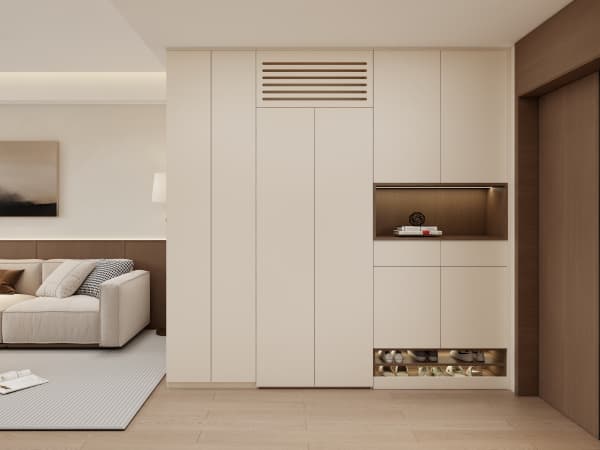
The corridor in a 4-room HDB of roughly 90 sqm is usually 1–1.2 m wide with blank walls begging for storage. A run of full-height cabinets here holds shoes, cleaning gear, the vacuum, and the odds and ends that clutter a home. Because it sits on the daily path, every door and drawer is opened constantly — far more than a wardrobe in the bedroom.
That usage pattern is why hardware matters more than looks. A cheap hinge that loosens after a thousand opens turns a tidy corridor into a rattling, misaligned eyesore. Spend on the moving parts and the cheap front still looks fine.
Custom Furniture hardware worth paying for
Specify branded soft-close hinges and full-extension ball-bearing runners rather than the generic imports some quotes quietly include. Soft-close saves the doors from slamming in a corridor where someone is always walking past, and full-extension runners let you reach the back of a deep drawer without unloading the front. For pull-out shoe systems, a heavier-duty runner rated for the loaded weight prevents the sag you see in budget builds.
Ask the carpenter to fix hinges into the carcass with at least three screws per leaf and to use adjustable cups so the doors can be realigned as the building settles. HDB flats shift slightly over the years, and adjustable hardware is what keeps the line straight.
Soft-close and noise rules
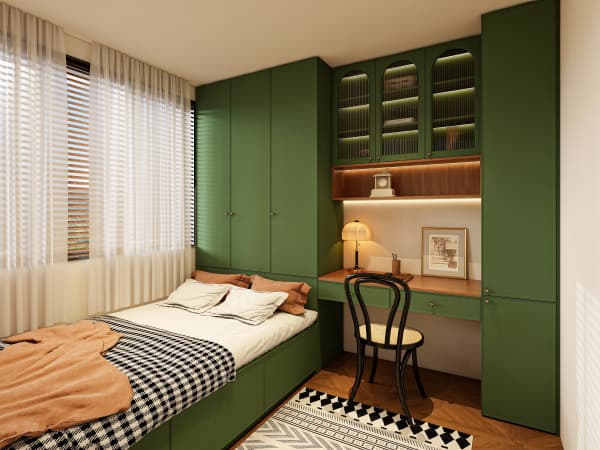
Soft-close is not just comfort; it is neighbour courtesy. In a corridor shared with bedrooms, a slam at midnight is a problem, and in a condo the MCST rules limit noisy works and expect considerate living, so quiet hardware is part of keeping the peace. A damped hinge closes in about one to two seconds and removes the bang entirely.
Pair it with felt or rubber door buffers and you have a corridor that stays silent even when the kids raid the shoe cabinet at dawn. The upgrade cost is small relative to the whole run.
Budget and lead time
Upgrading to branded soft-close hardware across a corridor run typically adds S$300–S$900 to the cabinet cost, depending on the number of doors and drawers. Against a whole-home custom budget of S$30k–S$70k, it is one of the highest-return spends you can make.
Lead time is the standard 6–10 weeks for custom carpentry. For a BTO, where keys typically arrive three to four years after launch, spec the hardware in the original quote so you are not upsold later. For a resale, book the carpenter early and insist the quote lists the hinge and runner brands by name.
The build carries the usual one-year defect warranty, but good hardware often has its own longer manufacturer cover. Keep the warranty cards and check every door at month eleven, since a loose hinge is cheap to fix under cover and annoying after.
Choose the hinges and runners first, then the doors, and the corridor will still feel solid years in. Insist on named brands in the quote, add soft-close for the neighbours, and book the carpenter early so the run is built right from the start.