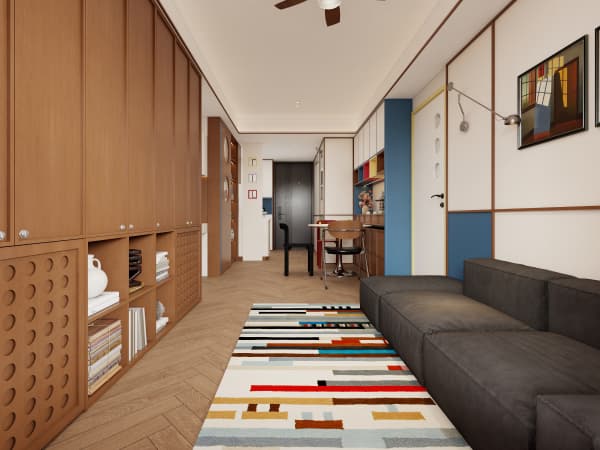
Custom Furniture of corridor: Strips That Show the Grain
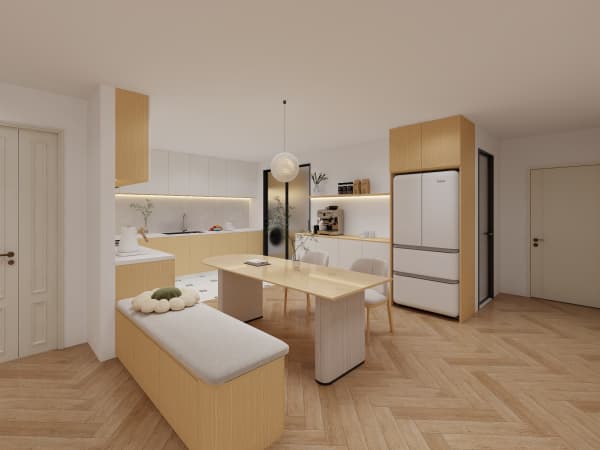
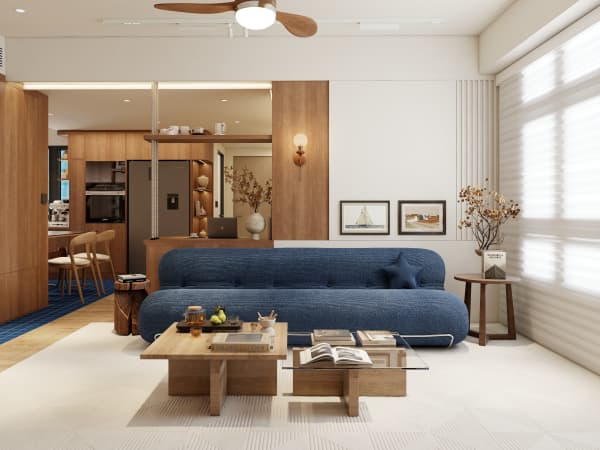
The corridor Custom Furniture strip wall is the most honest way to dress a narrow HDB gallery, because real wood grain catches the light as you walk past and hides the small dents a busy entryway always collects. It reads warm without the cost of cladding the whole passage, and it survives the comings and goings of a Singapore household better than a flat painted wall.
Where a corridor Custom Furniture strip wall makes sense
In an HDB flat the corridor is the spine you walk every day, from the shoe cabinet to the bedrooms, and a 4-room layout of about 90 sqm leaves a narrow gallery that flat paint does nothing for. A strip wall turns that dead space into the first thing guests see. The catch is HDB rules: you cannot protrude into the common corridor outside your door, and you cannot cover the fire safety items, so the strips stay inside your own wall line. Condo MCSTs are stricter still, often limiting fixed fittings near the main door and capping noisy works at roughly 9am to 5pm on weekdays.
- Keep the strips within your door reveal so the common corridor stays clear for neighbours and the fire escape.
- Vertical lines draw the eye up and make a low 2.6m ceiling feel taller than it is.
- Leave a 10mm shadow gap between strips so the grain reads as separate pieces, not a printed panel.
- Fix to the partition wall, never the structural RC wall, or you will be reopening the renovation permit.
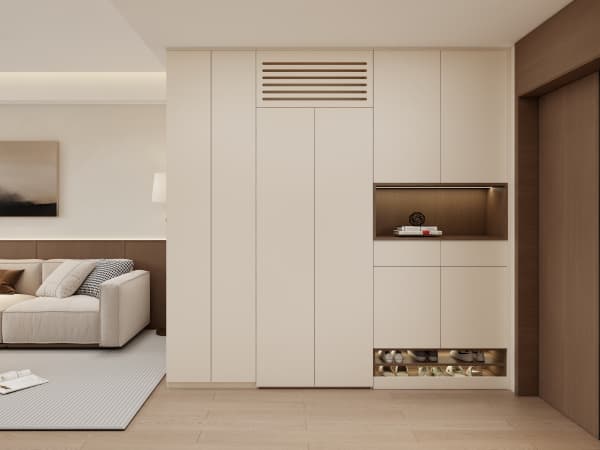
A strip wall also gives the shoe cabinet something to sit against, so the entry reads finished instead of a stack of open shelves. That small composition is what makes a flat feel designed rather than assembled.
Showing the grain without the solid-wood bill
Real solid timber strips are beautiful but pricey and they move with our humidity, so most homeowners choose a veneer over plywood with the grain book-matched across the run. You get the look of continuous grain at a fraction of the cost, and plywood behind it stays stable near the door where the rain blows in. Expect roughly S$1,500 to S$3,000 for a corridor feature depending on length, against whole-home custom budgets that typically fall between S$30k and S$70k by scope.
The finish decides whether the grain stays visible. A clear matte poly protects the wood and keeps the texture readable; a heavy gloss can look cheap and shows every smear. Ask for a water-based seal so the colour does not yellow the way older solvent finishes did, and confirm the veneer is real wood, not a printed laminate passed off as grain.
Lighting, lead time, and a warranty note
A strip wall only sings with light. A slim LED profile in the shadow gap or a picture light above throws the grain into relief; without it the corridor stays flat. Carpentry lead time is about 6 to 10 weeks, and BTO buyers who collect keys roughly 3 to 4 years after launch should schedule the corridor with the main run. A one-year defect warranty covers lifting veneer and loose strips, which is worth claiming at the eleven-month mark if any edge has curled in the wet season.
Wipe the strips with a dry duster weekly and a damp cloth monthly, and the grain keeps its depth. Done right, the corridor stops being a passage and becomes the part of the flat people remember.