Custom Furniture with bookshelf: A Glass Rack That Tilts
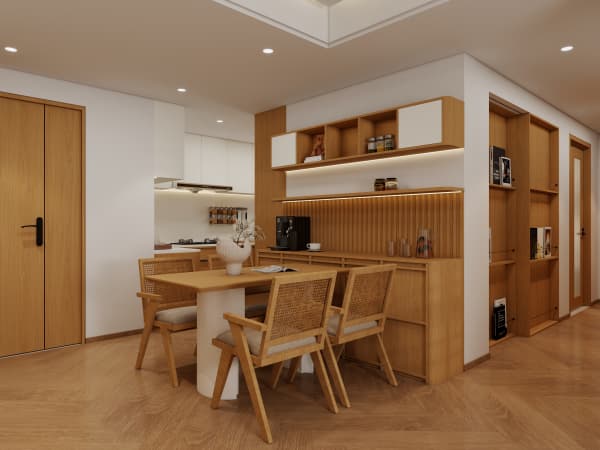
Custom Furniture that pairs a bookshelf with a tilting glass rack turns a plain wall into a spot that stores your reading and shows off the wine glasses. The tilt is the clever bit — glasses hang at a slight angle so dust stays out of the bowl and they're easy to grab.
Why tilt the glass rack
A flat rack lets dust settle inside the glass. A gentle tilt, about 10 to 15 degrees, drains any rinse water and keeps the opening facing down. Glasses come out cleaner and you're not rewashing before guests arrive.
It also looks considered. A row of tilted stems reads as a deliberate display, not a cluttered shelf. In a dining or living wall, that matters.
Where the bookshelf-and-rack goes
This build suits the dining area or a living room feature wall. In a 4-room HDB (about 90 sqm), it often anchors the dining nook. In a 5-room (around 110 sqm), it can run as part of a longer storage wall.
Condo units work the same, but check MCST rules before anything near fire-rated walls. Internal display cabinetry is normally fine.
How we build the tilt
The tilt needs to be right or glasses slide:
Fixed angle rail. We set the rail at a tested 12 degrees so stems sit secure but drain.
Rubber-lined grip. The cradle holds the foot without scratching the glass.
Open below. Shelves under the rack hold the books and the wine, clear of drips.
Lighting. A slim LED strip above makes the glasses the focal point at night.
Custom Furniture for a display wall
Custom Furniture for this wall should balance storage and show. We usually give books the closed or lower section and let the tilted glasses take the eye-level spotlight. Too much of either and it feels either like a library or a bar.
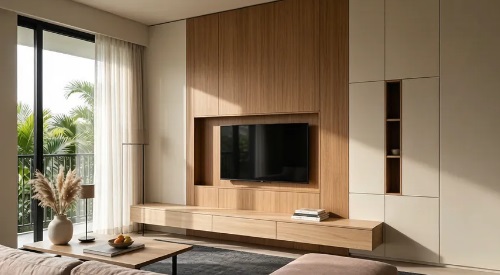
We also size the rack to your glass count. A family of four who entertains needs more stems than a couple who don't. Build to the actual habit.
Materials that look right
This is a display piece, so finish counts:
Solid wood gives the warmest look and ages well, at the highest cost.
Plywood with a laminate face is stable and cheaper, and reads clean in modern flats.
Laminate alone keeps the price down and wipes easily near the glasses.
MDF is fine for the carcass but avoid it where condensation might form.
Cost, timeline and approvals
A bookshelf with a tilting glass rack runs roughly S$1,500 to S$3,500, depending on width, lighting and material. Across a full reno of S$30k to S$70k, it's a moderate feature.
From measure to install, plan about 6 to 10 weeks. HDB work carries a one-year defect liability period, so a loose rail or flickering light in the first year gets fixed under that cover.
Care and resale
Dust the rack weekly and check the grip pads for wear. A worn pad risks a slip, so replace it early.
At resale, a built-in display wall reads as a finished, designed space. Buyers like a home that looks intentional. Keep the wood tone neutral and the next family can imagine their own glasses there.
The plain reason to tilt the rack is that it keeps glasses clean and shows them off without fuss. Pair it with a bookshelf and you get storage and a little theatre in one wall. Sometimes the small angles make the biggest difference.