HDB Interior Design Singapore: Balcony Screen For Budget-conscious Owners
HDB interior design Singapore has a quiet hero for owners watching their spend: the balcony screen. Newer BTO flats from around 2019 come with balconies that HDB does not allow to be enclosed, so a screen is how you gain privacy and shade without breaking the rules. A budget owner can do this for a fraction of a full renovation cost while keeping the flat breezy. The key is picking a screen that meets HDB guidance and your town council block look.
What a balcony screen can and cannot do
A balcony screen is a light panel fixed to the railing or the soffit. It cuts wind, filters morning sun, and blocks the direct view from the neighbouring block. It is not a wall and it must not enclose the balcony. Practical HDB interior design Singapore treats the balcony as found space, not a room to close. HDB keeps balconies open for safety and ventilation, so any screen stays within the existing railing line and uses breathable or semi-transparent material.
Budget owners like screens because they cost less than glass and need no permit-level works. You avoid hacking, so your HDB renovation permit scope stays small and processing at about 2 weeks is not delayed by new drawings.
Pick a material that fits the budget in HDB interior design Singapore
- Outdoor bamboo or rattan roll-up blinds. Cheap, natural, and easy to replace when the sun fades them.
- Polycarbonate louvre panels. Slightly more cost, blocks rain splash, and reads modern.
- Woven outdoor fabric on a track. Washable and available in neutral tones that suit most façades.
- Wooden slat screen on the soffit. Good for top shade, but seal it or it greys fast in Singapore humidity.
Avoid solid opaque boards that turn the balcony into a closed box. Town councils watch for this and can ask you to remove it. A semi-transparent screen passes the look test and still gives you privacy.
Install it in five simple steps
- Measure the railing width and the height you want covered. Most balconies need 90 to 110cm of screen above the waist rail.
- Choose a fixing method. Clips on the existing rail are best because they leave no drill marks on structure.
- Buy material with a small overhang so wind lifts it without tearing at the edge.
- Fix the top track first, then roll or slot the panel down. Check it moves freely before you trim the bottom.
- Step back and confirm the screen sits inside the balcony line and does not poke past the façade.
This is a weekend job for a handy owner, or a half-day call for your HDB Licensed Renovation Contractor if you want it sealed tidy.
Tie the screen to the rest of your flat
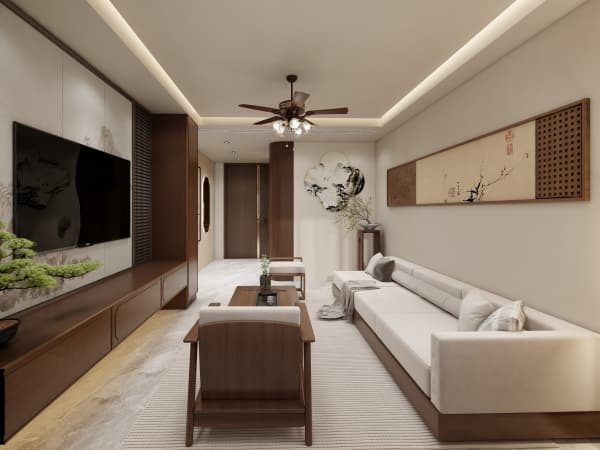
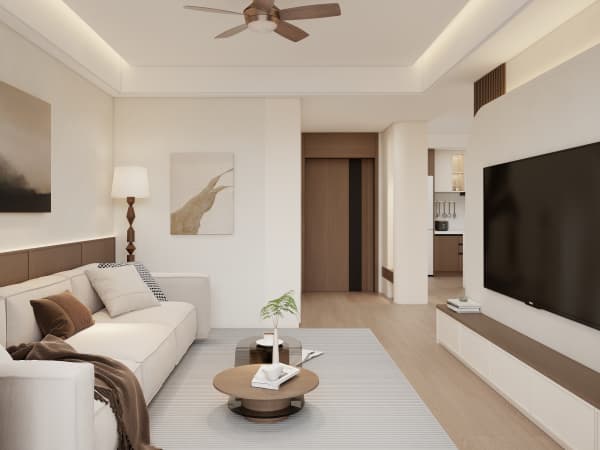
A balcony screen reads best when the indoor side matches. Use the same laminate tone from your living room carpentry on any planter box you build, and keep the cushion fabric close to your indoor palette. This HDB flat space saving mindset lets the balcony act as a second living space, not a forgotten strip.
If your BTO renovation timeline runs 8 to 12 weeks, add the screen in the final fix phase after painting. That way the rail is clean and the measurement is true. Resale owners can add a screen even before a full reno, since it needs no rewiring.
Keep costs honest
Market rates for a basic bamboo or fabric screen run roughly S$80 to S$250 for a standard balcony, against S$600-plus for a framed glass panel. Label any number your contractor gives as a market range, not a fixed quote, because balcony size and block rules vary. Ask for two options so you see the budget path clearly.
Make the balcony part of the whole home
A screen is one piece of a calm flat. When you plan the balcony together with the living room and the kitchen through whole-house customization, the materials and colours line up and the space feels designed rather than patched. Tell your designer you want a low-cost balcony screen in the same scheme as the rest, and the whole home reads as one decision instead of ten small ones.