HDB Interior Design: storage that hides the clutter
Good HDB Interior Design begins with your routine, not a catalogue. In a typical flat at about 2.6 metres ceiling height, every centimetre of storage and sightline matters.
A Layout That Breathes in Small Flats
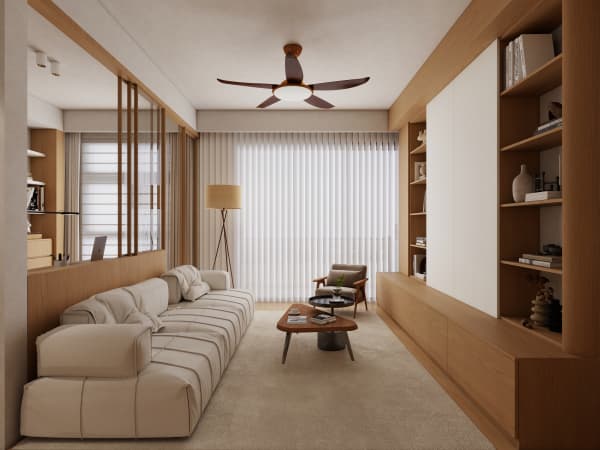
Compact flats reward open sightlines and low furniture. Keep the floor as clear as possible to let the eye travel across the room.
Built-ins along walls free the centre of the room and make a small flat feel considered rather than cramped and cluttered.
Float the sofa a little off the wall if you can. The small gap reads as space and makes the room feel less boxed in.
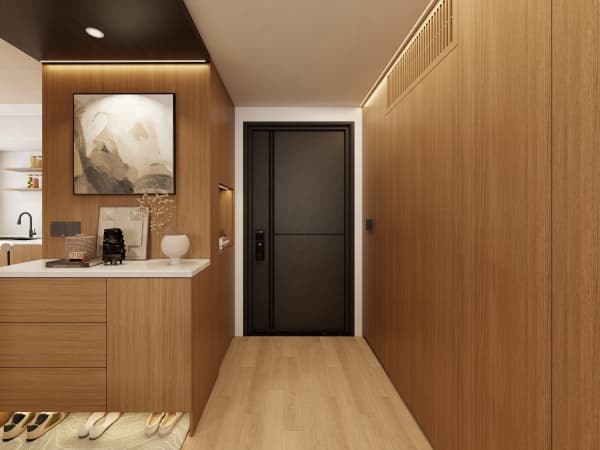
Carry one wood tone through the whole flat so the rooms read as designed, not assembled from sales.
The Permit Window for Interior Works
Renovation permits must be applied for within three months of key collection or resale completion and stay valid for three months.
Align your design and contractor search to that clock so the creative phase does not eat into the build phase.
If you are unsure when your window opens, check the key-collection or resale-completion date and count from there.
A neutral base with one accent ages far better than a bold colour in every room.
Wardrobes Built Into Tight Bedrooms
A built-in wardrobe frees floor space and uses the full wall height. It also keeps the bedroom visually calm and uncluttered.
Pair it with a small desk or vanity to make one wall do several jobs, which is gold in a compact master bedroom.
Mirror one door to bounce light and make the room feel larger without adding a single square foot.
A neutral base with one accent ages far better than a bold colour in every room.
HDB Interior Design Myths to Ignore
A common myth is that more open shelves mean more style. In a humid, dusty climate they mean more cleaning and more visual noise.
Another is that dark colours shrink a room. Used as a single accent wall, they can actually add depth and make a space feel intentional.
A third myth is that you must follow trends. Trends date; a calm, functional plan does not.
Photograph the empty rooms at different times of day; light is the cheapest upgrade and the easiest to waste.
Open Shelving Versus Concealed Storage
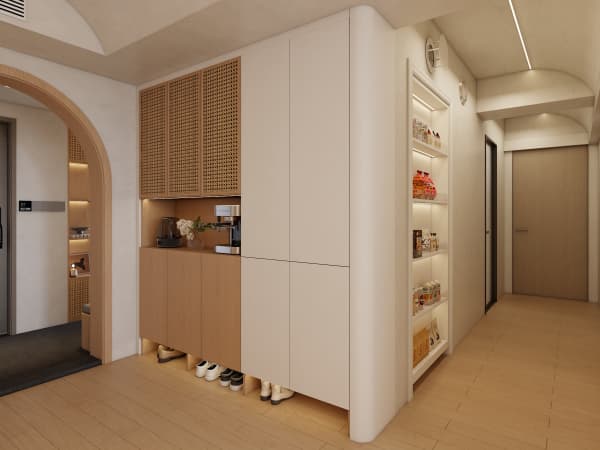
Concealed storage hides daily clutter; open shelves show favourite pieces. Most homes benefit from a careful mix rather than all of one.

Too much open shelving in a small flat quickly reads as messy, because life is messy and the shelf shows it all.
Reserve open display for a single curated shelf, then hide the rest behind fronts you can wipe in seconds.
Resist the urge to fill every corner; restraint reads as confidence rather than clutter.
A Family-Proof Interior That Lasts
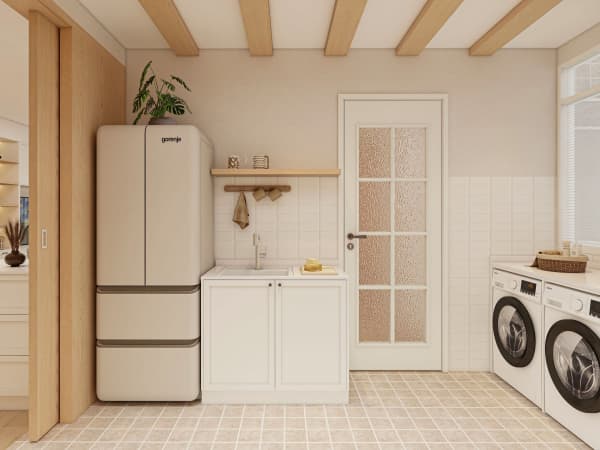
Durable surfaces, rounded edges and easy-clean materials survive kids and daily wear. Storage that hides clutter keeps it sane.
Plan for the home you will live in five years, not just move-in day, when the children are small and the routines are new.
Choose fabrics and floors that forgive, because a showroom-white sofa rarely survives a real family intact.
Carry one wood tone through the whole flat so the rooms read as designed, not assembled from sales.
The best interiors feel inevitable rather than designed. Keep the palette tight, the storage hidden and the light layered, and the flat will feel larger and calmer.