HDB Renovation: when a false ceiling pays off
HDB Renovation ceilings in most flats sit around 2.6 metres, which leaves little room to play with. A false ceiling can hide wires and even out the look, but it also eats height you may not have to spare.
Why HDB Renovation ceilings start so low
Most HDB flats are built with a ceiling height close to 2.6 metres, and after you account for flooring and the existing slab, there isn't a lot to give away. That's the core tension with a false ceiling: it looks clean and hides the mess above, but every centimetre you drop is a centimetre less headroom in a home that was never tall to begin with. Understanding that trade is the whole decision.
What a false ceiling actually buys you
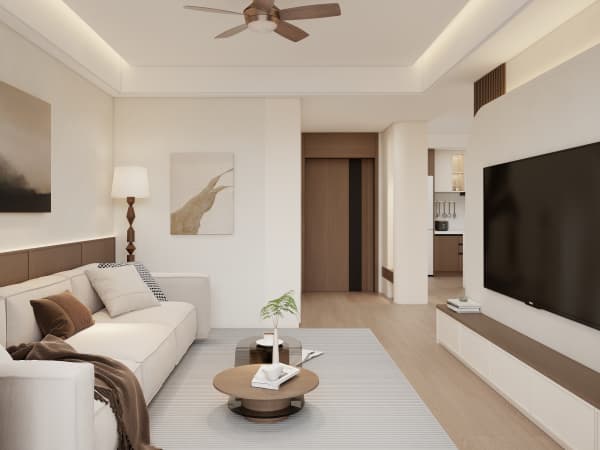
The main draw is concealment. Aircon trunking, electrical cables, and the odd pipe can all disappear behind a clean plane, and you get a smooth surface to mount downlights or run a cove line. It also lets you level out an uneven original ceiling and zone the light neatly room by room. For owners who want a modern, uncluttered look, that hidden infrastructure is worth a lot.

- Hide the mess: aircon pipes and cables vanish instead of running exposed.
- Even light: recessed downlights and cove strips sit flush and look intentional.
- Level the room: old flats with wonky ceilings get a clean, straight line.
The real cost: lost headroom
A false ceiling usually drops the room by 10 to 15 centimetres once you allow for the frame and the fittings. In a 2.6-metre flat that takes you to roughly 2.45 metres, which most people still clear fine, but it changes the feel, especially in the living room where you stand and move a lot. Taller members of the household notice it, and pendant lights or ceiling fans get harder to place. It's a real cost, not just a number on a drawing.
When it's worth the trade
A false ceiling earns its keep in a few clear cases. If your aircon trunking would otherwise run ugly and exposed across the living room, hiding it is worth the drop. If you want cove lighting for that open, airy glow, the ceiling is what carries it. And in older resale flats with uneven original ceilings, levelling makes the whole place feel newer. Where it's harder to justify is a plain bedroom that just needs a couple of lights, there a simple surface fitting does the job without costing height.
- Prioritise the living and dining areas where the clean look shows most.
- Skip it in low-use rooms unless the wiring genuinely needs hiding.
- If you're tall or love a ceiling fan, keep at least one room full height.
Alternatives that keep the height
If you like the idea but hate the loss, you've got options. A slim pelmet or a cove only at the edges gives you the glow without dropping the whole plane. Surface-mounted tracks and neat conduit keep wiring tidy without boxing in the ceiling. And a well-planned whole-house customization can route many cables through carpentry and service areas instead, leaving the ceiling open. The point is to spend the height only where it pays, and keep it everywhere else so the flat stays as tall and bright as it started.