HDB Wardrobe Tips: a layout that fits your actual clothes
When you plan an HDB Wardrobe, the shell of the flat sets the rules. Work around windows and the bomb shelter door so nothing blocks airflow or access.
Shoe Storage That Is Not Messy
Tilted shoe drawers or a low open rack keep pairs in order. Avoid stacking on the floor where they collect dust and trip you.
Ventilated fronts stop smells in a closed cabinet, because shoes sealed in still air are the fastest route to a bedroom that reeks.
Keep everyday shoes at the bottom and occasion pairs up high, so the morning rush never becomes a digging expedition.
Rotate seasonal items twice a year so nothing hides at the back forgotten for three years.
Ventilation to Avoid Musty Smells
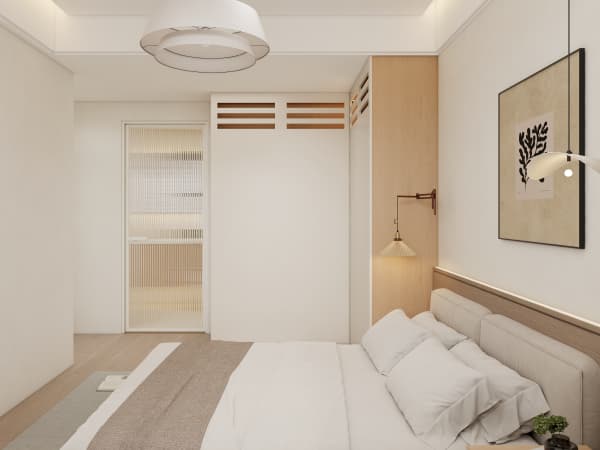
Leave a small gap at the back or use vented panels so air moves. Humidity builds fast behind a sealed wardrobe against an outer wall.
Good extraction in the bedroom helps the whole wall, so the wardrobe is only as fresh as the air the room can move.
Toss a sachet of cedar or charcoal inside; it is a cheap insurance against the smell that ruins good clothes.
Toss a sachet of cedar or charcoal inside; it is cheap insurance against the smell that ruins good clothes.
A Layout That Fits Your Actual Clothes
Split the interior by item type: long hang, short hang, shelves, drawers. Most wardrobes under-use folded storage and regret it.
Adjustable shelves let the layout shift as your wardrobe changes, so the cabinet grows with you instead of against you.
Give long dresses their own clear section up top, because cramming them into a short hang zone wrinkles them permanently.
Toss a sachet of cedar or charcoal inside; it is cheap insurance against the smell that ruins good clothes.
A Timeless Neutral Look
Neutral tones age well and suit resale. A single accent front can add character without dating the room in three years.
Avoid loud colours you may tire of quickly, because repainting a wardrobe interior is far more work than a wall.
Carry one wood tone through the bedroom so the wardrobe feels part of the room rather than a separate object plonked down.
Use ventilated fronts for shoes; sealed-in footwear is the fastest route to a bedroom that reeks.
HDB Wardrobe Myths to Drop
One myth is that more hanging space is always better. Most people need more folded storage than they think, and shelves serve them.
Another is that sliding doors save room. They need less swing space but more depth, and freestanding wastes the wall height a built-in uses.
A third myth is that the door face is the wardrobe. The internal layout is what you live with, and that is where to spend the thought.
Use ventilated fronts for shoes; sealed-in footwear is the fastest route to a bedroom that reeks.
Lighting Inside the Wardrobe
A motion-sensor LED strip inside means no fumbling in the dark. Wire it during carpentry so nothing shows afterwards.
Warm light makes colours read truer than cool, so you do not leave home in a shirt that clashed under a blue bulb.
Put the sensor at the door edge so it switches on the moment you open, and off a minute after you close.
Keep everyday shoes at the bottom and occasion pairs up high, so the morning rush is never a dig.
Built-in wardrobes turn dead wall into calm storage. Keep the layout flexible, the finish neutral, and the bedroom stays restful.