How do you add smart-home features to a 4-room BTO living area in Singapore?
The living and dining area is the heart of a 4-room BTO flat, and it is also the easiest place to wire in smart-home tech without touching structure. This HDB Renovation Guide Singapore explains the HDB rules that apply to smart-home additions in a 4-room BTO living and dining area, plus a practical checklist. The short version is that lighting, sensors, and switches are fair game, but anything that alters the distribution board or the structural walls needs care and approval.
What HDB allows in a living area
A BTO living space starts with fixed power points and a basic lighting circuit. You can add smart switches, smart bulbs, motion sensors, and a hub without a permit because these sit on top of the existing wiring. HDB does cap the total number of allowed electrical points, so plan your living area devices within that cap and resist the urge to double up every socket. Non-structural works like a feature wall are allowed with approval, but beams and the slab stay put.
Practical smart-home additions
- Smart switches replace the faceplate and let you schedule the living room lights from a phone.
- Motion or ambient sensors trim wasted lighting when no one is in the room.
- A smart plug on the TV console cuts standby draw, a real saver given our long hours at home.
- Motorised curtains on a track add comfort, but need a power point planned near the pelmet.
- A hub ties the devices together, though many Singapore homes run on Wi-Fi alone.
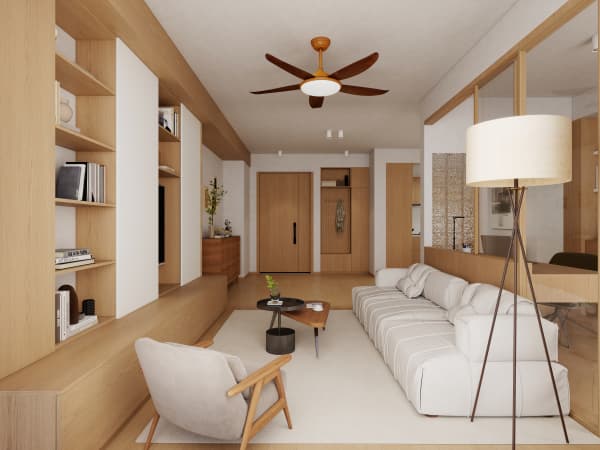
HDB rules to respect
- Keep within the allowed electrical point count; ask your contractor for the exact cap before ordering.
- Do not relocate the distribution board or run new circuits into the structural wall without approval.
- Use only HDB-registered contractors for any work that needs a permit.
- Recall that hacking is limited, so a feature wall must avoid the bomb shelter and service areas.
- Noise rules still bite: any drilling for mounts runs Monday to Saturday, 9am to 6pm only.
A pre-install checklist
- List every device and map it to an existing or planned power point.
- Count the points against HDB's cap with your contractor.
- Decide on Wi-Fi versus a wired hub before the carpentry goes in.
- Plan curtain and sensor cables during the 8 to 12 week BTO schedule, not after.
- Label the circuits so future changes stay simple.
Frequently asked questions
Do smart bulbs need a permit? No, they screw into existing fittings, but smart switches that alter wiring should be done by a registered electrician.
Will smart home add much to the cost? A basic living area setup runs S$300 to S$900, far less than the carpentry that dominates a 4-room BTO.
Can I add this after key collection? Yes, most smart adds are retrofittable, which is why many owners phase them in later.
A 4-room BTO living and dining area in Singapore takes smart-home tech well because the safe options sit on top of the existing wiring, so plan the points within HDB's cap and the living space stays clever without ever breaking the rules.